
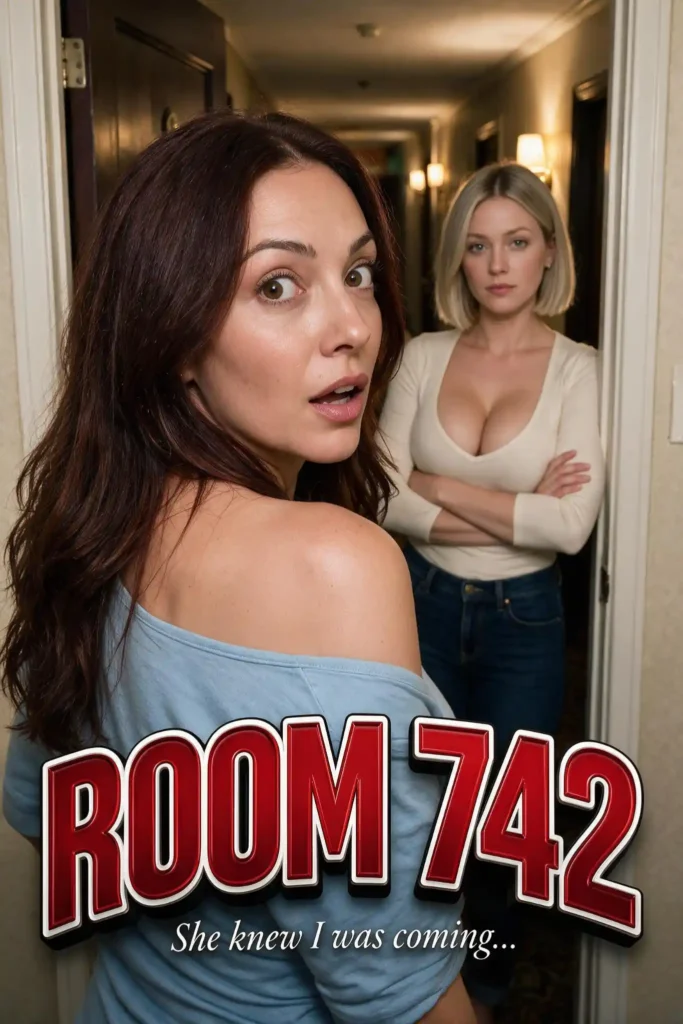
Where Room 742 stops being safe for work
Between part two and part three. And it’s a hard line here, no slow fade. The two free parts of Room 742 keep everybody covered and get by on implication: a hotel corridor, the wrong door, a conversation nobody sensible would be having. Then part three arrives, the register flips, and it never flips back. So the free stretch on this one is honest about the tone. About the heat? It tells you nothing.
A keycard that opens a door it shouldn’t
Hotels run on one little assumption, that the plastic card in your pocket knows which room is yours. Not this time. The door gives, the number above it reads 742, and there’s a man already inside using the place like it’s his own. Because it is. Our narrator doesn’t back out. No apology, no sheepish trip down to reception to get it fixed, and that refusal is the hinge the whole thing swings on. It’s a decision made in a doorway. Nobody stumbled into anything.
A minute later somebody knocks. It’s his wife. She isn’t alarmed and she isn’t there gathering evidence, either, because she had a hand in this long before any keycard got involved: she’s the one who chose the stranger now standing in her husband’s room. What she wants is a chair, a decent sightline and permission to stay. The opening pair lays all of that out and then just stops.
Is Room 742 uncensored?
Past the wall, yes. Nothing blurred, no polite cutaway right when it matters. What I’d flag is that the first two parts aren’t a tamer version of what follows. They’re a different register altogether, which is exactly why the sample can’t answer the question people actually type into a search bar. The labels won’t help you either. Every title in Candy Shorts wears the same decorative romance and spicy tags, and Room 742 carries those two and nothing else.
36 tokens for the three locked parts
Twelve tokens a go, three goes. Room 742 costs 36 to reach the final frame, which is the flat rate for a five-part run on Candy Shorts, and there’s no Candy AI plan or subscription that turns the key for you. The difference is the size of the stage your money gets spread over. Almost everything else at that price keeps hopping between kitchens, offices and family homes. This one shrinks to a single suite and pretty much stays there. Standard money, unusually small square footage.
How it sits next to its price neighbours
Trapped Desires: Island Swap. Lusting for daddy’s watchdog. The stepdaughter’s boyfriend story. Same five parts each, same 36. Every one of them sets up a rule and leans on it, whether that’s a deal, a wage or loyalty to the family. Compared with those, Room 742 skips the rule entirely. The transgression is finished business before the free portion even ends, and what’s left to settle isn’t whether anything happens. It’s who gets permission to stand there and watch. If you’ve just sat through a run of slow-build household stories, that’s a genuinely different shape for identical money.
Nothing waits after part five
Price this in before you commit, because when it ends, it ends. No character steps out onto your account afterwards and there’s no thread to pick up tomorrow. Most of the catalogue hands you somebody to keep talking to; this one declines. If conversation is half of why you spend, that’s a loss. For a story about one night in a rented room, though, my verdict on Room 742 is that it’s the right call. The odd bit is the woman running the whole arrangement. She never gets a name of her own, she’s described by her marriage and that’s it, which is strange billing for the person holding all the leverage.