By Valeria Moretti. Updated April 24, 2026.
I started reviewing AI adult content tools because the space was exploding and nobody was doing the real work of figuring out what actually worked versus what was just hype. In 2024 that meant testing image generators, trying new companion chat platforms, comparing video models fresh out of beta. It was interesting, it was new, and there was room to do the job properly.
Then something shifted during 2024 and 2025. A part of the industry, specifically the one building tools to “undress” photos of real people, apply non-consensual face-swaps, or create deepfakes of identifiable individuals, became increasingly central to the conversation. The numbers stopped being anecdotes and started being statistics. Women, teenage girls, in some cases minors, finding themselves cast as subjects of explicit content they never agreed to create.
By late 2025 I started looking at this site, the site I built, with tools I personally tested and reviews I wrote myself, and I realized some of the categories we carried were no longer compatible with the direction I want this project to take. This page explains what we changed and why.
What We Removed
In April 2026 we completed a full editorial review of the site. We removed reviews, categories, and references tied to:
Tools whose primary function is removing clothing from photographs of real people uploaded by the user. You can call them “undress,” “nudify,” “deepnude,” or anything else. The name changes, the function does not.
Face-swap and identity-transfer tools when the marketing and common use converges on applying real people’s likenesses to explicit content without documented consent.
Platforms that have received regulatory sanctions in the European Union, United Kingdom, United States, or other jurisdictions for facilitating non-consensual content.
Services where community usage patterns and public galleries indicate that the prevailing purpose, regardless of the platform’s stated policies, is the creation of non-consensual intimate imagery.
Altogether we removed roughly 400+ pages from the site. I could have kept them with disclaimers attached (“use responsibly,” “only on yourself,” “never on minors”). Plenty of sites do exactly that. But a disclaimer underneath a review of a tool whose predominant use is non-consensual does not change anything substantive. Either the function is compatible with consensual, fictional use, or it is not. There is no middle ground built out of legal warnings.
What Is Actually Happening in the Real World
I am not taking this position because I enjoy moralizing. I am responding to a context that is changing fast.
In the United States, the TAKE IT DOWN Act (Tools to Address Known Exploitation by Immobilizing Technological Deepfakes on Websites and Networks Act), signed into federal law on May 19, 2025, made the knowing publication of non-consensual intimate imagery a federal offense, with specific provisions for AI-generated content and deepfakes. The law requires covered platforms to remove reported content within 48 hours and is enforced by the Federal Trade Commission. The Congressional Research Service legal analysis provides the clearest overview of the Act’s scope and obligations.
In the United Kingdom, the Online Safety Act 2023 with its subsequent amendments criminalized the creation and sharing of non-consensual sexually explicit deepfakes. Ofcom has published detailed enforcement guidance that addresses AI tools marketed for these purposes. The Revenge Porn Helpline tracks enforcement and supports victims. This is no longer a gray zone.
In the European Union, the EU AI Act (Regulation 2024/1689) classifies certain categories of deepfake applications as high-risk or prohibited under its risk-based framework. Individual member states have added specific criminal statutes on top. The EU has applied direct sanctions against platforms found to facilitate non-consensual content, particularly in cases involving minors. Yes, it has happened, including recently, including inside Europe.
In Australia, the Criminal Code Amendment (Deepfake Sexual Material) Act 2024 introduced criminal penalties for creating and sharing this type of material, with enforcement coordinated by the eSafety Commissioner.
Similar legislation is in force or in advanced stages across Canada, South Korea, Japan, Brazil, and many other countries. The global direction is not ambiguous anymore.
I cite these laws not because I am a legal consultant, I am not, and legislation moves faster than I can track. I cite them to say that the tools we removed from this site operate in legal territory that is deep red in most markets that matter. Reviewing them felt less acceptable than any revenue they might have produced.
What We Still Review
This site still exists and it has a clear perimeter. We review AI platforms that generate fictional adult content.
Fictional character generators create entirely synthetic subjects from text prompts, tags, or style selections. The characters come from the model, they are not real people.
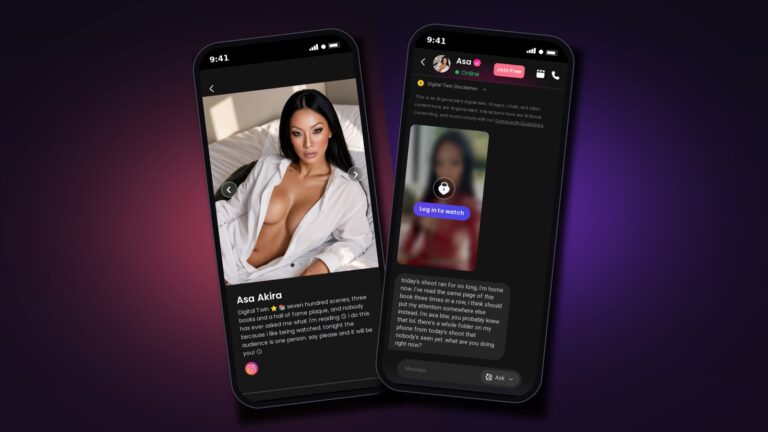
AI companion and chat applications offer conversations with fictional characters created by the user or provided by the platform.
AI video generators for fictional content produce scenes with synthetic subjects. Same principle as image generators, just in motion.
AI adult art tools generate hentai, anime, or illustrative content that is explicitly stylized and fictional.
Text-based story and roleplay generators produce adult fiction and roleplay scenarios.
When I review one of these platforms I look at output quality, how much control the user has over the process, pricing transparency, how the platform handles data, and whether it actually enforces its own terms of service. Not every tool in these categories ends up on the site. Some get excluded because, although nominally “fictional generators,” they carry features or usage patterns that push them toward the non-consensual side.
How I Decide What to Review
Before a tool gets on the site I check a few things.
I ask whether the platform runs on AI-generated fictional characters by architecture, or whether it accepts uploads of real photos for adult transformation. If it accepts uploads of real people, I do not review it.
I look at the platform’s policy on real-person content. What do the terms of service say, and what happens in practice when someone breaks them? Some platforms have excellent policies and nonexistent moderation. Those do not make the cut.
I check regulatory status. Has the tool been the subject of sanctions, takedown orders, or legal action in jurisdictions that matter? If yes, and the matter has not been resolved transparently, I do not review it.
I observe how the community actually uses the tool. What dominates the public galleries? What are the most common output patterns? Sometimes the real nature of a tool shows in its usage more than in its marketing.
I look at who runs the platform. Is it clear who operates it, where it is based, how it handles user data? Platforms that operate opaquely relative to regulation are riskier for users and for the industry.
These criteria are not algorithmic, they are editorial. I apply them at my discretion and they evolve with the industry. That also means I sometimes get it wrong and have to correct course. I do that publicly, by updating this page.
If You Have Been Targeted by This Kind of Content
If someone has created content that depicts you without your consent, there are real resources that work and do not require going through a lawyer.
StopNCII.org is a free tool that uses hashing technology to help remove non-consensual intimate images from participating platforms globally. It works by generating a digital fingerprint of your image on your own device, so the actual image never leaves your control. Operated by the Revenge Porn Helpline, it partners with major platforms including Meta, TikTok, Bumble, Reddit, and many others.
For victims in the United States, the Cyber Civil Rights Initiative runs a crisis helpline and provides legal resources. The National Center for Missing & Exploited Children operates Take It Down, a service specifically for minors or for images taken when the person was under 18.
For victims in the United Kingdom, the Revenge Porn Helpline provides direct support, removal assistance, and legal advice.
In Italy, the Postal Police operates a dedicated reporting channel for online sexual violence and NCII, and the Red Button service run by the National Cybersecurity Agency handles reports involving minors.
For direct platform reports, Google, Meta, Reddit, X, and TikTok all have dedicated NCII reporting channels. These are often the fastest path to removal.
For legal avenues, NCII is now a criminal matter across most Western jurisdictions. It can be reported to local law enforcement or specialized cybercrime units.
If you need to talk to someone and do not know where to start, these helplines are staffed by people whose actual job is to help. Taking the first step is not always easy, but the support exists and it is real.
About Being Honest About This
It would be dishonest not to say this. Removing this content cost me something. Traffic, revenue, time I spent writing reviews that no longer exist. I am not saying that to collect credit, I am saying it because I believe in being transparent about how these decisions get made.
I could have kept everything and layered on warnings. I could have done the minimum compliance theater to look the part. I chose to make a clean decision instead, even though it costs more, because the AI adult content space needs operators willing to draw clear lines right now, while the legal and cultural landscape is clarifying, and pretending otherwise is no longer sustainable.
I do not think my site changes the world. But I do think every site in this industry has a responsibility to decide what it shows and what it does not. This is my decision, written down here for the record, updated as the context evolves.
If you have questions, criticism, or you have spotted something on the site that does not look consistent with what I wrote here, email me at info@aigenerationporn.com. I answer personally.
Valeria