Same price, same length, different machinery
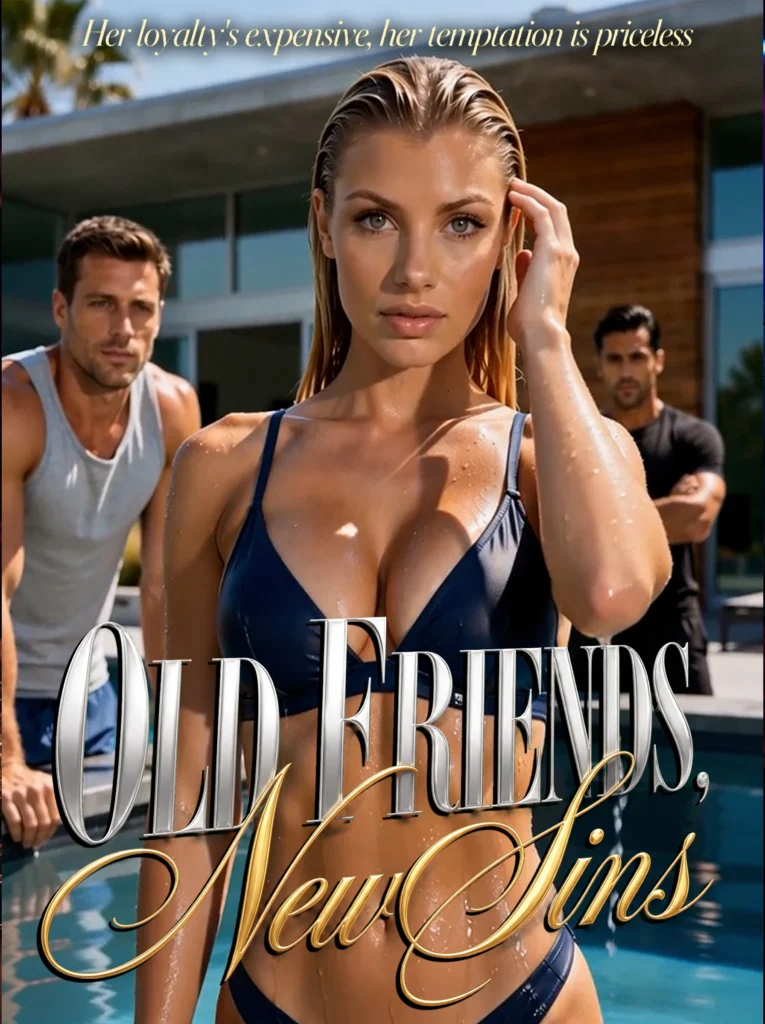
Old Friends, New Sins makes a lot more sense once it’s compared with the three titles the platform lines it up against. Lusting for daddy’s watchdog, Trapped Desires: Island Swap and My Stepdaughter’s Boyfriend each run five parts for 36 tokens, exactly like this one, so price settles nothing. The real difference is who does the pushing. In those three it’s the setup: a hired man in one, a swap in another, some family loyalty in the third. This one sets up nothing. It has a woman with a plan and a man who won’t go along with it.
Dasha, the money running out, and a man who won’t play
Dasha is expensive and has never once apologised for it. The life she runs, the standards she keeps, the way a room rearranges itself when she walks in: all of that’s been paid for by a boyfriend whose finances have just gone through the floor. His bankruptcy is the starting gun. She doesn’t grieve. She doesn’t stand by him either. She does the maths.
His best friend, meanwhile, has money, keeps his head, and (going by everything the setup tells you) does not budge. So she points herself at him and waits for the usual routine to kick in. It doesn’t. He won’t chase her or flatter her, won’t act like a man who’s been chosen, and since her whole method assumes being chased, that refusal takes the power out of her hands and parks it somewhere she never planned for. The two free parts of Old Friends, New Sins carry the crash, the calculation and their first real conversation, all of it clothed and said sideways.
How explicit it gets, and when
You reach the end of part two before money comes up at all, and you get there without seeing anything graphic. The first two hold back on purpose, and it’s mostly subtext and people looking at each other. Then from part three Old Friends, New Sins drops all that and goes explicit, and it stays that way to the very last frame. So the unpaid pair is a fair way to judge the tone. For judging content it’s no use whatsoever.
What the three locked parts cost
Twelve tokens each, three of them, so Old Friends, New Sins costs 36 to finish. That’s the flat Candy Shorts rate, and no subscription touches it. Where the money sits well is proportion. The story hangs on a single turn, and the free portion sets that turn up clearly enough that you can guess in advance if it’ll work on you. You’re not gambling on a premise you haven’t met. You’re paying to watch a reversal whose groundwork is already laid out in front of you.
Who should spend on this one
Anyone who likes a lead with unflattering motives and no interest in dressing them up. Dasha is calculating and money-minded, and she’s written without a single apology. If that comes across as cold to you, there’s nothing softer waiting in reserve. There’s no household here, no third party, nobody walking in from outside: it’s two people across five parts, and one shift in who holds the power.
What’s left once it’s finished
The last part isn’t a goodbye. A character from this one stays on your account afterwards for ordinary conversation, so the woman who walked in confident and walked out reorganised is still somebody you can talk to. Plenty of Candy Shorts stories just stop and take everyone with them. This isn’t one of those, and for a premise whose whole interest is a change in somebody, having the changed version stick around counts for something.