
Where My Wife’s Best Friend sits among the ten credited titles
Only ten series on Candy Shorts carry a performer credit, and they all charge the same: 30 tokens for each episode you pay for, so 90 to get to the end of a five-parter. Riley Reid has three of the seven. That makes her the one Candy Creator you can hold up against herself, and I think it’s the most useful way in. My Step-Sister’s Dormitory keeps changing location. My Stepmom’s Weekend shuts itself inside one property for two days. Compared with those two, My Wife’s Best Friend is the run with a wife in it, and that’s a bigger difference than it sounds. The marriage exists. It gets mentioned. Then the story politely sends its most inconvenient person offstage so the other two can get on with not saying anything.
Who takes the spare room, and whose house it is
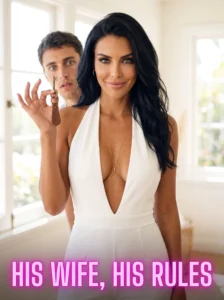
Our narrator’s married. His wife has a friend who was in her life years before he was, and who quietly outranks him in that house. The friend needs somewhere to land, so she lands: the spare room, a slot on the bathroom rota, a chair at dinner. What the story leans on is her reputation. In this fiction she used to have a very public career, one plenty of people watched closely, and nobody has ever brought it up at that dinner table. Everybody knows. Nobody says a word, the husband least of all, since saying it would mean admitting he’s given it some thought. The two free episodes of My Wife’s Best Friend lay that setup out and leave it alone: the invitation, his wife’s cheerful lack of suspicion, the house getting used a little differently, and the moment the guest works out exactly what he won’t admit. They flirt. They linger. Every button stays done up.
The episode where the discretion runs out
Three. The first pair is suggestive and nothing more, and I don’t read that as prudishness, because the restraint is holding the whole thing up. A story about something nobody will name has to keep not naming it for a while, or the silence doesn’t mean much. From the third episode My Wife’s Best Friend drops the act and stays explicit straight through the fifth.
What My Wife’s Best Friend costs, and what the premium is really for
Ninety tokens: three paid episodes at 30 each. An unlicensed five-parter with exactly the same bones asks 36, which means 54 of those tokens pay for the credit and only the credit. Here’s what makes this one unusual, though. The credit isn’t decoration. The plot needs you to recognize its lead, so the part you’re paying extra for is doing real story work instead of sitting on the cover looking pretty. That’s about the strongest argument a licensed series can make for itself, and it still costs two and a half times the plain rate.
Riley Reid’s part in it
Candy AI holds the rights to her likeness, prints her name wherever it uses them, and builds the episodes from that permission. No camera was involved. The platform doesn’t claim anything beyond that, and I’m not going to either.
Who should spend, and what survives episode five
My verdict on My Wife’s Best Friend is simple enough. Buy it if the unspeakable-thing-under-your-roof mood is your kind of thing and you’d rather have it inside a marriage than a family tree. Skip it if 30 tokens an episode feels like a surcharge on a name you never cared about. And she doesn’t disappear from your account when the run ends. The character carries on into ordinary Candy AI conversation, so what you’re really buying on Candy Shorts here is a story with a door left open at the far end, not a full stop.